Can Dogs Eat Button Mushrooms? Safe vs Toxic
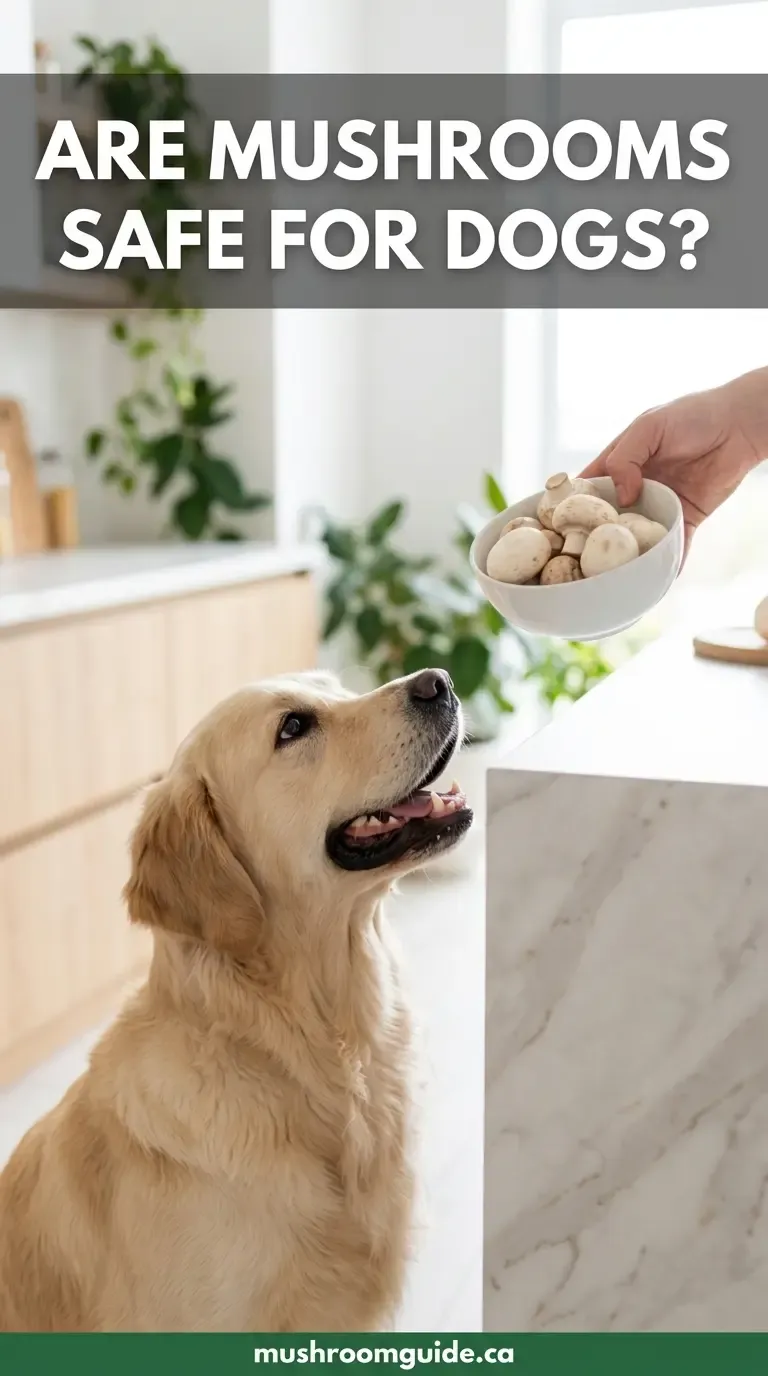
Can dogs eat button mushrooms? Yes — plain, cooked white button mushrooms (Agaricus bisporus, the supermarket “champignon de Paris”) are non-toxic to dogs in small amounts. The mushroom itself is the easy part. The danger is what humans cook it with — and telling a store mushroom apart from a wild one.
Quick answer: Plain white button mushrooms — and their siblings cremini and portobello (the same species, just older) — are safe for dogs in small amounts, cooked plain with no garlic, onion, butter, oil, or salt. They aren’t toxic, but raw they’re hard to digest, and the seasonings humans add can be dangerous. Never feed wild mushrooms. If your dog ate a wild one, call your vet or the Pet Poison Helpline (1-855-764-7661).
This page is about the most common mushroom in a Canadian kitchen — the white button. For the full dogs-and-cats reference across every species, see the pet-safe mushrooms guide; for the gourmet variety, see can dogs eat oyster mushrooms?
This is not veterinary advice. When in doubt, contact a vet or the Pet Poison Helpline. If your dog ate a wild mushroom, don’t wait for symptoms.
Button, cremini, portobello — they’re all the same mushroom
This trips a lot of people up: white button, cremini (baby bella), and portobello are all the same species, Agaricus bisporus — just harvested at different stages of maturity.
| Form | What it is | Safe for dogs (plain, cooked)? |
|---|---|---|
| White button | Young Agaricus bisporus | ✅ Yes, small amounts |
| Cremini / baby bella | Brown strain, slightly older | ✅ Yes, small amounts |
| Portobello | Fully mature cremini | ✅ Yes, small amounts |
| Any of the above, raw | — | ⚠️ Not toxic, but hard to digest |
| Cooked with onion/garlic/butter/salt | — | ❌ No — the seasoning is the danger |
So if you’ve read that cremini or portobello are dog-safe, the same is true of plain white buttons — and vice versa.
How to feed button mushrooms to a dog
Two rules cover almost everything:
- Cook them, plain. Steam, boil, or sauté in water for 3–4 minutes. Dogs lack the enzymes to break down chitin (mushroom cell-wall material) efficiently, so raw mushrooms commonly cause vomiting, gas, or loose stool even though they aren’t poisonous.
- No seasoning. Onion, garlic, leek, chive, and shallot (the Allium family) destroy red blood cells in dogs and cause hemolytic anemia. Butter and heavy oil can trigger pancreatitis. A pan of garlic butter mushrooms is dangerous to a dog because of the garlic and butter — not the mushroom.
Keep portions small: a piece or two as a treat is fine; a bowlful of any mushroom will likely upset a dog’s stomach from volume alone.
Symptoms to watch for
Even with a safe, plain mushroom, introduce a small amount and watch for:
- Vomiting or diarrhea
- Excessive drooling
- Gas or loss of appetite
- Lethargy
These usually mean it was too much, too rich, or simply didn’t agree with your dog. They pass. Wild-mushroom symptoms are a different story — see below.
The real risk: wild mushrooms, not button mushrooms
A white button from the grocery store is one thing. A mushroom that appeared on your lawn overnight is another entirely. Several species established in Canada — including Amanita phalloides (death cap), Amanita virosa (destroying angel), and Galerina marginata — can kill a dog from a single serving, and you cannot tell a safe wild mushroom from a deadly one by looking.
This is why MushroomGuide.ca is cultivation-only and does not publish wild-mushroom identification — see our foraging policy.
If your dog eats a wild mushroom:
- Get it away from the dog and take a sample (including the base).
- Photograph the mushroom and where it grew.
- Call your vet or the Pet Poison Helpline (1-855-764-7661) immediately — don’t wait for symptoms.
- Don’t induce vomiting unless instructed.
Bottom line
Yes, dogs can eat button mushrooms — cooked plain, in small amounts, with no garlic, onion, butter, or salt. White, cremini, and portobello are the same safe species. The two things that actually harm dogs are the seasonings and wild mushrooms, never the plain button itself.
This is not veterinary advice. Always check with your veterinarian before introducing new foods, especially if your dog has existing health conditions or takes medication.
See also: Pet-safe mushrooms guide — every cultivated species, for dogs and cats. Can dogs eat oyster mushrooms? — the gourmet variety, with portion sizes. Foraging policy — why we don’t publish wild-mushroom identification.