Can Cats Eat Mushrooms? Safe vs Toxic
Last updated
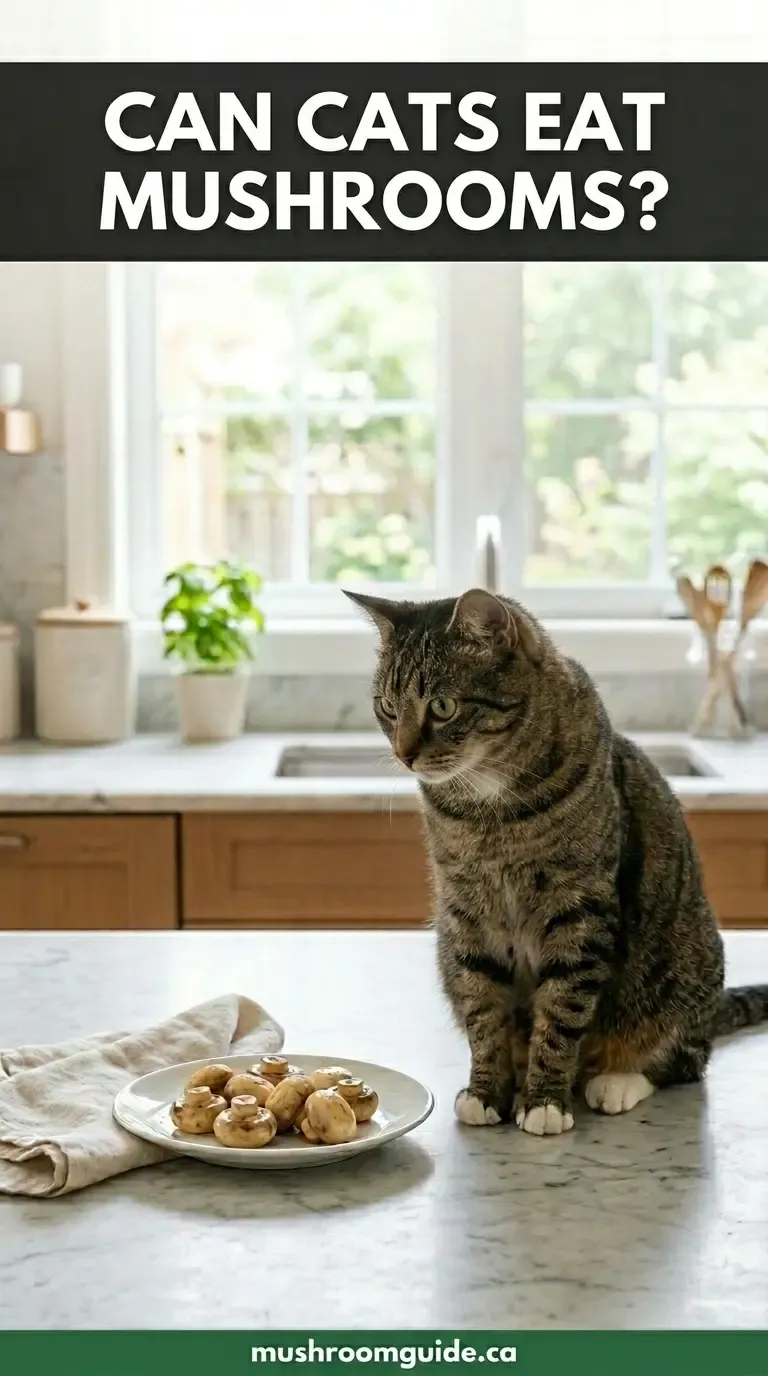
Can cats eat mushrooms? A plain, cooked grocery-store mushroom — white button, cremini, portobello, even oyster — is non-toxic to a cat in a tiny amount. But the more useful answer is that cats are obligate carnivores: mushrooms aren’t a necessary or beneficial food for them. The real risks are what humans cook mushrooms with, and telling a store mushroom apart from a wild one.
Quick answer: Plain, cooked white button (and cremini, portobello, oyster) mushrooms are safe for cats as an occasional tiny taste — no garlic, onion, butter, oil, or salt. They aren’t toxic, but they’re not something a cat needs. Never feed wild mushrooms. If your cat ate a wild one, call your vet or the Pet Poison Helpline (1-855-764-7661).
For the full dogs-and-cats reference across every species, see the pet-safe mushrooms guide. For the dog side, see can dogs eat button mushrooms? and can dogs eat oyster mushrooms?
This is not veterinary advice. When in doubt, contact a vet or the Pet Poison Helpline. If your cat ate a wild mushroom, don’t wait for symptoms.
Cats are obligate carnivores — mushrooms aren’t a food they need
Unlike dogs, cats are obligate carnivores: their bodies are built to run on animal protein, and they get essential nutrients like taurine from meat, not plants. A mushroom isn’t poisonous to a cat, but it also doesn’t do anything for one. So the honest framing isn’t “should I add mushrooms to my cat’s diet” — it’s “my cat got into a mushroom, is that a problem?” Usually, with a plain store mushroom, no. With a wild one or a seasoned dish, potentially yes.
Why is my cat interested in mushrooms?
Cats can taste umami, and mushrooms are loaded with glutamate — the same savoury compound cats pick up in meat. That’s the likely reason a cat will sniff at or paw a mushroom: it reads as savoury. Curiosity isn’t a nutritional signal, though. A tiny plain taste won’t hurt, but there’s no reason to make it a habit.
If you offer a cat mushroom, do it this way
Two rules cover almost everything:
- Cook it, plain, and keep it tiny. Steam or simmer in water for a few minutes. Cats lack the enzymes to break down chitin (mushroom cell-wall material) well, so raw mushroom commonly causes vomiting or loose stool. A taste — not a serving — is the right amount.
- No seasoning, ever. Onion, garlic, leek, chive, and shallot (the Allium family) are toxic to cats and damage red blood cells, causing anemia — and cats are especially sensitive. Butter, cream, and oil add fat many cats can’t handle and can trigger stomach upset. A pan of garlic-butter mushrooms is dangerous to a cat because of the garlic and butter, not the mushroom.
Symptoms to watch for
Even with a plain, safe mushroom, watch for:
- Vomiting or diarrhea
- Drooling
- Loss of appetite or lethargy
These usually mean it was too much or simply didn’t agree with your cat, and they pass. Wild-mushroom symptoms are a different story — see below.
The real risk: wild mushrooms, not store mushrooms
A white button from the grocery store is one thing. A mushroom that sprang up in a potted plant or on the lawn is another entirely. Several species established in Canada — including Amanita phalloides (death cap), Amanita virosa (destroying angel), and Galerina marginata — can kill a cat from a tiny amount, and you cannot tell a safe wild mushroom from a deadly one by looking.
This is why MushroomGuide.ca is cultivation-only and does not publish wild-mushroom identification — see our foraging policy.
If your cat eats a wild mushroom:
- Get it away from the cat and take a sample (including the base).
- Photograph the mushroom and where it grew.
- Call your vet or the Pet Poison Helpline (1-855-764-7661) immediately — don’t wait for symptoms.
- Don’t induce vomiting unless instructed.
Bottom line
Plain, cooked store-bought mushrooms aren’t toxic to cats, but cats are obligate carnivores and don’t need them. If your cat steals a tiny taste of an unseasoned mushroom, it’s almost always fine. The two things that actually harm cats are the seasonings (especially garlic and onion) and wild mushrooms — never the plain mushroom itself.
This is not veterinary advice. Always check with your veterinarian before introducing new foods, especially if your cat has existing health conditions or takes medication.
See also — cats, by mushroom: Can cats eat oyster mushrooms? — the oyster-specific answer. Can cats eat king oyster mushrooms? — the dense-stemmed “scallop” mushroom. Can cats eat button mushrooms? — white, cremini and portobello.
More: Pet-safe mushrooms guide — every cultivated species, for dogs and cats. Can dogs eat button mushrooms? — the dog side, with portion sizes. Foraging policy — why we don’t publish wild-mushroom identification.