How to Cook Lion's Mane (Tastes Like Crab)
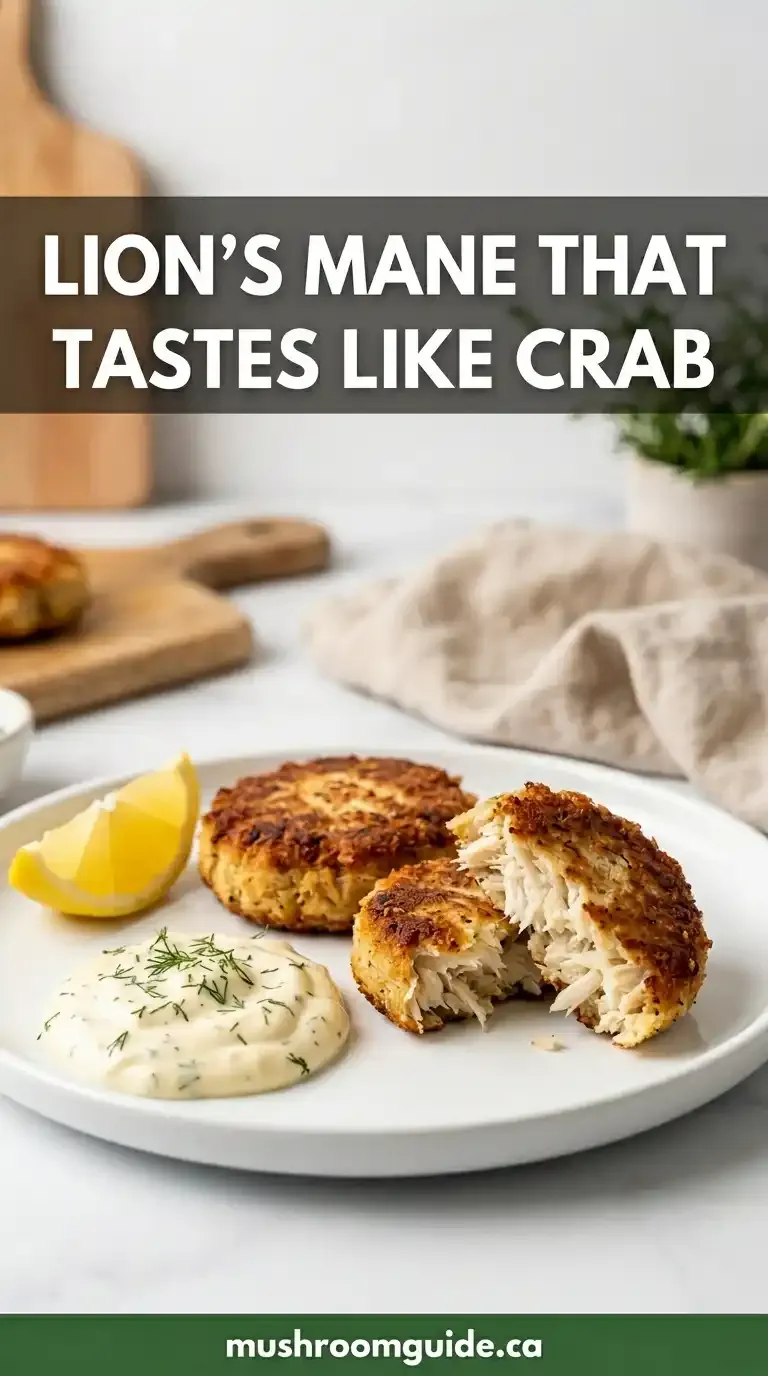
How to cook lion’s mane mushrooms? The short version: tear it into shreds, dry-sear it hard to drive off the water, then finish in butter. Done right, lion’s mane (Hericium erinaceus) tastes uncannily like crab or lobster — mild, sweet, savoury, with a flaky, stringy texture that pulls apart like seafood. Done wrong, it’s a wet, spongy disappointment. The difference is one technique.
Quick answer: Lion’s mane is a “tooth fungus” that grows as a white pom-pom. Cooked properly it tastes like crab or lobster. The secret is to tear (don’t chop) it into shreds and dry-sear it in a dry pan for 5–7 minutes, pressing it down to release its water, before adding any butter or oil. Then it crisps and browns instead of stewing. Finish with butter, garlic, and a squeeze of lemon.
Grew your own? This is the cooking companion to how to grow lion’s mane mushrooms in Canada. If you’re still deciding what it is and how it compares to other gourmet varieties, see king oyster vs. oyster vs. lion’s mane.
What lion’s mane tastes like
Lion’s mane is the “crab of the mushroom world.” When cooked, the flavour is:
- Mild and slightly sweet — no earthy or funky mushroom edge
- Seafood-like — most people land on crab, some say lobster or scallop
- Savoury and rich once browned in butter
The texture is its real party trick. Lion’s mane is made of fine, hanging spines, so it naturally pulls apart into stringy, flaky shreds — the same mouthfeel as lump crab or shredded chicken. That’s what makes it such a strong meat and seafood substitute.
The one technique that matters: press and sear
Lion’s mane is roughly 90% water, and that water is the enemy of flavour and texture. The single most important thing you can do is get the water out before you add fat.
- Tear, don’t chop. Pull the mushroom apart along its natural strands into bite-sized shreds. Tearing preserves the seafood-like texture; chopping turns it to mush.
- Don’t wash it. Lion’s mane is a sponge. Rinsing waterlogs it and kills the sear. Brush or wipe with a barely-damp cloth if needed.
- Dry-sear first. Put the shreds in a dry (no oil) pan over medium-high heat. Press them down with a spatula. For the first 5–7 minutes they’ll hiss and release water — let it cook off. The mushroom will shrink by about half and start to turn golden.
- Now add fat. Once the pan is dry and the mushroom is browning, add butter (or oil) plus garlic. Toss to coat and cook another 2–3 minutes until deep golden and crisp at the edges.
- Season at the end. Salt off the heat, finish with lemon and fresh herbs.
Skip step 3 and you get pale, rubbery, watery mushroom. Nail it and you get the crispy, golden, crab-like result lion’s mane is famous for.
Best flavour pairings
Lion’s mane’s seafood character loves the same things crab and lobster do:
| Pairing | Why it works |
|---|---|
| Butter | Richness + browning; the classic finish |
| Garlic | Savoury depth without overpowering |
| Lemon | Brightens the sweet, seafood notes |
| Old Bay / seafood seasoning | Leans straight into the crab comparison |
| Fresh parsley, chives, dill | Herb lift, like a seafood dish |
| White wine or a splash of sherry | Deglaze for a quick pan sauce |
| Panko | Crunchy coating for cakes and “scallops” |
Go easy on anything that buries the delicate flavour — heavy spice blends, lots of soy, or strong cheeses will drown the crab note that makes lion’s mane special.
Recipe: lion’s mane crab cakes
This is the dish that shows off everything lion’s mane does well — the flaky texture, the seafood flavour, the meat-substitute trick. Full ingredient list and steps are in the recipe card above; the short version:
- Shred and dry-sear the lion’s mane to drive off water.
- Squeeze out any remaining liquid in a towel.
- Bind with egg, mayo, Dijon, panko, green onion, Old Bay, parsley, and lemon zest.
- Form, coat in panko, chill, then pan-fry until golden and crisp.
- Serve with lemon and a garlic aioli or remoulade.
They come out crisp outside, flaky inside, and genuinely crab-cake-like.
More ways to cook it
- Lion’s mane “scallops”: slice a thick stem crosswise into rounds, dry-sear, then baste in foaming garlic butter — a dead ringer for seared scallops.
- Lobster-style rolls: shred, sear, toss with a little mayo, lemon, and chives, and pile into a toasted bun.
- Pulled “crab” filling: shred finely and use as a taco, sandwich, or pasta filling — a clean meat substitute that soaks up whatever sauce you give it.
- Simple side: dry-sear, finish in butter and garlic, salt and lemon. That’s it.
Storage and prep notes
Cook lion’s mane while it’s fresh and white; once it yellows or feels spongy, the flavour fades. For keeping it at its best before you cook, see how to store oyster mushrooms — the same paper-bag-in-the-fridge rules apply to lion’s mane.
Common mistakes
- Washing it — waterlogs the sponge, kills the sear.
- Chopping instead of tearing — loses the crab-like texture.
- Crowding the pan — steams instead of sears; cook in batches.
- Adding oil too early — the mushroom stews in its own water.
- Over-seasoning — buries the delicate seafood flavour.
FAQ
What does lion’s mane taste like? Cooked properly, like crab or lobster — mild, slightly sweet, savoury, with a flaky, stringy texture. Raw or undercooked it’s bland and spongy.
How do you cook lion’s mane so it isn’t soggy? Dry-sear it first: tear into shreds and cook in a dry pan, pressing it down, for 5–7 minutes to release the water before adding any fat.
Do you need to wash lion’s mane before cooking? No — don’t rinse it. It soaks up water and won’t sear. Brush or wipe with a barely-damp cloth instead.
Is lion’s mane a good meat substitute? Yes. Its dense, stringy texture pulls apart like crab or chicken, so it stands in for seafood in cakes and rolls, or as a shredded “pulled” filling.
Related: How to grow lion’s mane mushrooms in Canada — grow your own, then cook it with this guide. King oyster vs. oyster vs. lion’s mane — how the three gourmet varieties compare in the kitchen. How to store oyster mushrooms — keep your harvest fresh before you cook it.